


5 Things You Should NOT Do With Saltillo Tile Floors
June 28, 2025 Rustico Tile Staff All Blogs, Cantera Stone, Cement Tile, Installation Guide & Products, Saltillo Tile Cleaners, Glazed Terracotta Tile, Installation Guide Social Share
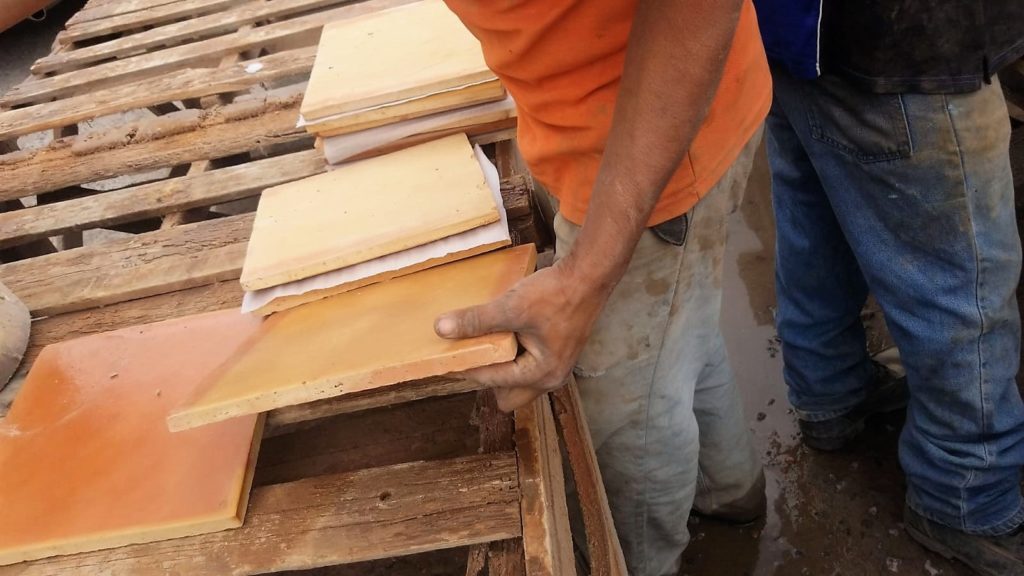
Saltillo tile offers timeless style and rustic charm, but proper care and installation are key to making the most of its beauty. In this guide, we outline common mistakes homeowners and installers should avoid — and what you should do instead.
We’ve helped over 200K customers in the past two decades. Take it from us: There are some do’s and don’ts regarding Saltillo tile flooring.
1. Do NOT Buy Unsealed Tiles
When it comes to Saltillo tile, one of the most important choices you’ll make is whether to purchase sealed or unsealed tiles. Here’s why sealed Saltillo tile is a smart investment for homeowners who want a beautiful, low-maintenance floor that lasts.
Protection from Stains & Moisture
Saltillo tile is porous by nature, meaning unsealed tiles can absorb water, oils, and spills—leading to stains or efflorescence (white salt residue). Sealed tiles are protected from day one, preventing costly issues and preserving their natural beauty.
Time & Cost Savings During Installation
Buying pre-sealed Saltillo tiles (like those offered by Rustico Tile & Stone) means:
- Less labor during installation (no soaking or pre-install sealing required)
- Faster install times
- Lower risk of mistakes like uneven finish or tile discoloration
Enhanced Appearance & Durability
Sealants enrich the color of Saltillo tiles and create a more consistent finish. Some sealers also provide a slight sheen or matte look, depending on your style preference. Over time, a sealed tile floor resists fading and develops a rich patina that adds character and depth. Rustico Tile® pre-sealed tiles, a sustainable flooring option, have five coats of penetrating sealer coated into the tile.
Buy Pre-Sealed Saltillo Tiles.
Install the Floor.
Apply (high quality) Topcoat Sealer.
Our sealers have a lifespan of up to 15 years. Trust the pros at Rustico Tile®.
2. Do NOT Soak Saltillo Tile
In the past, it was common for installers to soak Saltillo tile in water prior to installation—a practice intended to mimic the benefits that modern penetrating sealers now provide. However, this outdated method can lead to significant long-term issues.
When Saltillo tile absorbs excess water during installation, it becomes highly susceptible to efflorescence — a condition where white, chalky mineral deposits surface as moisture escapes the clay. This not only detracts from the beauty of your floor but can also compromise its integrity over time.
To avoid these complications entirely, do not soak Saltillo tile before installation. Instead, choose pre-sealed Saltillo tile, which is ready to install straight out of the box. This approach simplifies the process, prevents moisture-related problems, and preserves the handmade beauty of your flooring for years to come.
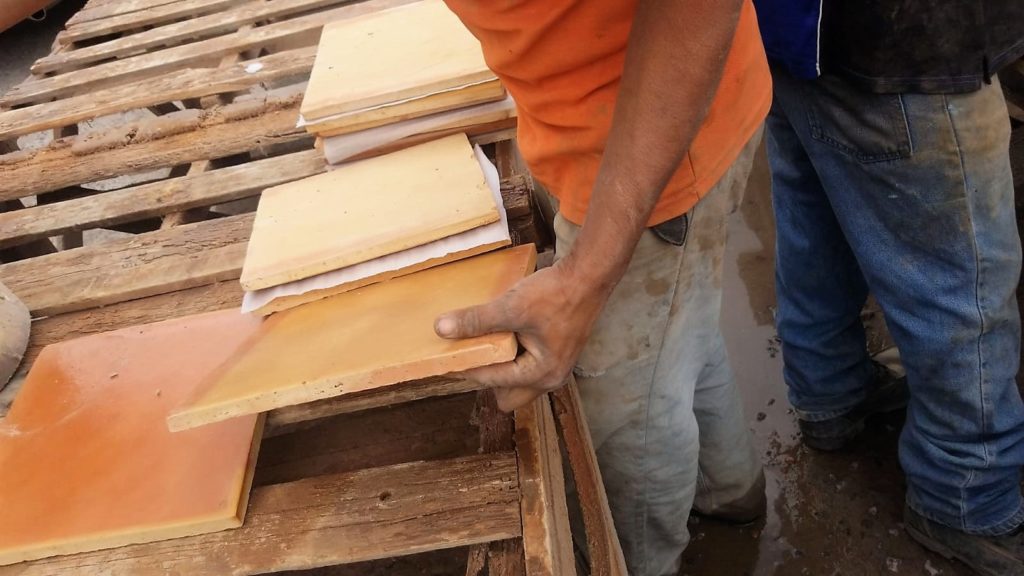
3. Do NOT Use Spacers to install handmade saltillo tile
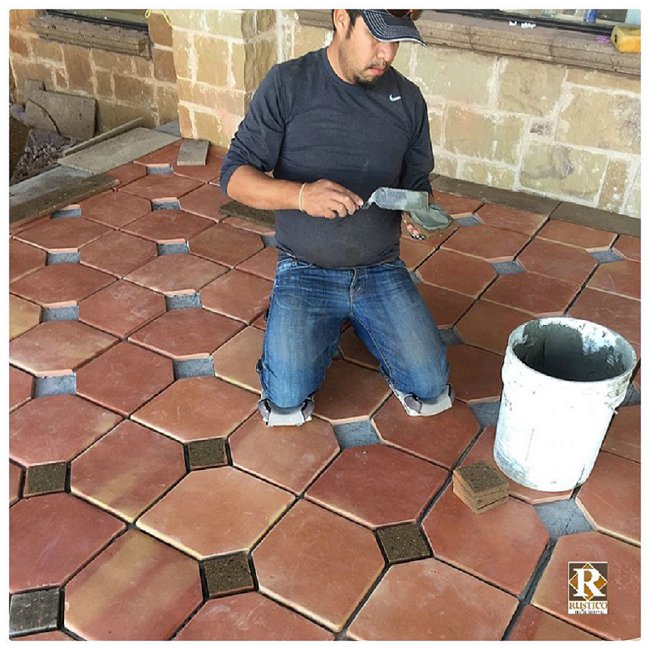
Saltillo tiles are handcrafted, which means slight variations in size and thickness are not only normal—they’re part of their unique, rustic charm. However, these organic differences make traditional tile spacers problematic during installation. While the first few rows may seem to align well, you’ll quickly notice irregular spacing and alignment issues as the layout progresses.
Instead of using spacers, experienced installers rely on grid lines or snapped chalk lines on the subfloor to guide placement. This method ensures consistent grout joints and allows for minor adjustments tile by tile—critical when working with handmade materials.
Successful Saltillo tile installation is as much about craftsmanship as it is about technique laying handmade terra cotta tiles. When done properly, it results in a stunning, artisan-quality floor with timeless appeal.
Note: This guidance applies specifically to Saltillo tile. Other products we offer, such as Cement Tile and Cantera Stone, feature more uniform sizing and can be installed using spacers.
4.Do NOT Strip Saltillo Tile.
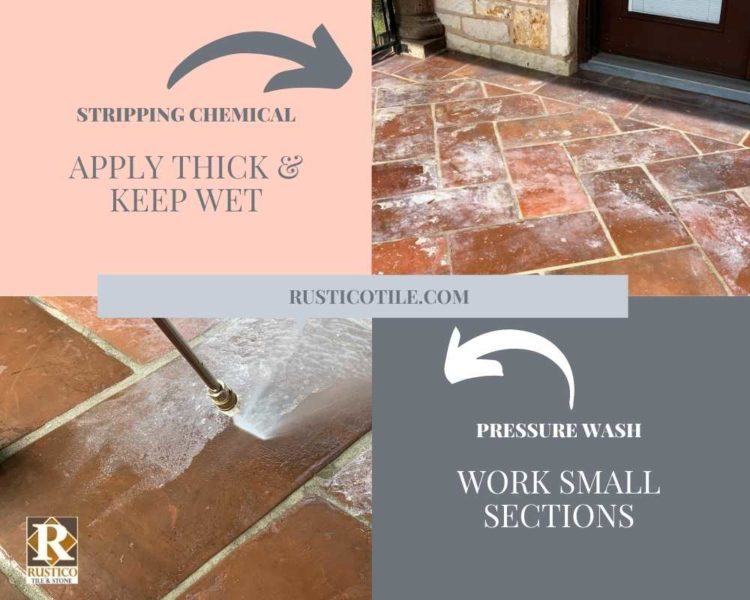
We only recommend stripping Saltillo clay tile as a last resort to repair or refinish a floor. In most instances, a floor can be fixed using other methods that will not damage or discolor the tile. The risks of chemically stripping Saltillo floors include bleaching/discoloration of the clay, sealer delamination, and ongoing maintenance issues created from residual stripping chemicals trapped in the clay.
Chemical strippers can cause permanent discoloration, bleaching of the natural clay, and sealer delamination. Worse, residual chemicals may become trapped within the porous tile, leading to long-term maintenance headaches and an uneven finish.
Before moving forward with stripping, we strongly recommend exploring other maintenance solutions—such as resealing, deep cleaning with a pH-neutral cleaner, or professional refinishing services. These options are not only safer for your Saltillo tile, but they also help preserve its integrity and rich character over time.
How to Know When Your Saltillo Tile Needs Resealing
Even when properly sealed, Saltillo tile requires maintenance over time. Regular seal assessments ensure your floor stays protected from stains, moisture, and wear. Here’s how to check your seal and determine when it’s time for resealing.
The Water Drop Test
This quick test helps homeowners identify if their Saltillo tile sealer is still doing its job:
- Pour a few drops of clean water onto several areas of the tile surface.
- Wait 60 seconds.
- If the water beads up, your seal is intact.
- If the water absorbs and darkens the tile, it’s time to reseal.
This test is safe to perform every few months—especially in high-traffic areas or spaces exposed to moisture, like kitchens and outdoor patios.
Recommended Resealing Frequency
Resealing frequency depends on how and where your Saltillo tile is used:
| Area Type | Resealing Interval |
| High-traffic indoor areas (entryways, kitchens) | Every 2–3 years |
| Low-traffic indoor areas (bedrooms, offices) | Every 4–5 years |
| Outdoor installations (patios, courtyards) | Every 1–2 years (depending on climate and exposure) |
Tip: Additional Signs Your Tile Needs Resealing
- Tiles appear patchy or uneven in color
- Grout is becoming noticeably discolored
- Tiles start looking dull or chalky
- Increased staining or water spots after spills
- Your floor feels rougher or more porous underfoot
Resealing regularly not only protects your Saltillo tile—it also enhances its natural warmth and ensures it ages beautifully over the years.
How to Reseal Saltillo Tile Floors: Step-by-Step Guide
Even high-quality sealed Saltillo tile will need to be resealed periodically to maintain its beauty and protect it from wear. Here’s a simple, DIY-friendly guide to help you reseal your Saltillo tile floors like a pro.
Tools & Materials You’ll Need
- Saltillo tile–appropriate penetrating sealer (solvent- or water-based)
- Clean lint-free cloths or microfiber mop
- Paint tray and foam applicator pad or sprayer
- Protective gloves and mask
- Painter’s tape (to protect adjacent areas)
Resealing Steps
- Clean the tile thoroughly using a pH-neutral cleaner. Let it dry completely—this may take 24 hours.
- Apply the sealer evenly with a foam applicator or sprayer. Work in small sections to prevent streaking.
- Wipe off excess with a clean cloth after 10–15 minutes (if the product instructions suggest).
- Allow to dry completely—most sealers require 4–6 hours of drying before foot traffic and up to 48 hours for full curing.
- Apply a second coat if recommended, using the same process.
Tip: Always test your sealer on a small, hidden area first to ensure desired results.
5.Do NOT Use Harsh Chemicals to Clean Your Sealed Saltillo Tile
To preserve the life of the Saltillo tile sealer, choose a cleaner that is not harsh. For example, dilute any detergent to lessen the impact of harsh chemicals. We like using a water/vinegar mixture for routine cleanings.
Since our floors have a durable Saltillo tile sealer coating, you may use a bleach/water mixture a few times yearly for deep cleaning and disinfecting. With kids, dogs, and a front door open to many, our floors occasionally need a disinfectant overhaul However, we don’t advise on the strength of bleach in universally cleaning Saltillo tile.
That recommendation applies only to floors with a sealer like TerraNano Saltillo Tile Sealer that can withstand strong chemicals. Even still, dilute it with water. Also, some windows should be opened, and ceiling fans should be turned on to boost ventilation. This is a common-sense approach to tile sealer. The lifespan of a good quality sealer will last several years when it’s maintained properly.
Preserve the life of your sealer by using diluted cleaning chemicals or no chemicals at all. We love the disinfecting power of a steam mop on our Saltillo floors. No chemicals are used with steam mops, so the life of the sealer is preserved.
Mop Dilution Recommendations
| Cleaner Type | Example Product | Dilution Ratio | Best Use Case |
| pH-neutral | Hard-floor cleaner | 1 oz per gallon (≈ 30 mL/3.8 L) | Daily cleaning, safe for routine use |
| Light alkaline | Ammonia-based cleaner | ½ cup per gallon (120 mL/3.8 L) | Periodic deep cleans on well-sealed floors |
| Vinegar solution | 5 % white distilled vinegar | ½ cup vinegar + 1½ gal water | Spot checks or strip prepping (no rinse needed) |
Tips for safe use:
- Always test on a small, inconspicuous area first.
- Rinse promptly after using acidic or alkaline blends.
- Stick with pH-neutral cleaners for regular care.
Why pH matters for Saltillo tile
Saltillo tile is naturally porous and sensitive to harsh chemicals, so understanding the pH of your cleaning solution is essential to preserve its finish and longevity.
Understanding pH vs Acid Cleaning & Dilution Guide:
- pH-neutral cleaners (pH 6–8): Gently clean dirt without damaging sealers or eroding clay.
- Acidic cleaners (pH < 7), like vinegar: Can strip sealers or etch edges if overused.
- Alkaline cleaners (pH > 8), such as mild ammonia blends: Lift grime, but may degrade softer sealers over time.
Want to explore ideas for your project?